Characters Guide for METAL GEAR SOLID: MASTER COLLECTION Vol.2
Metal Gear Solid: Master Collection Vol.2 brings together three distinct chapters of the Metal Gear saga, each featuring a rich and memorable cast of characters. From Old Snake's final mission in Guns of the Patriots to Big Boss's covert operations in Peace Walker and Solid Snake's non-canon adventure in Ghost Babel, this guide covers every major and supporting character across all three titles, detailing their backstories, factional allegiances, and roles in gameplay.
Metal Gear Solid 4: Guns of the Patriots — Protagonists and Allies
Old Snake, the legendary soldier formerly known as Solid Snake, serves as the protagonist of Guns of the Patriots. Suffering from accelerated aging caused by his nature as a clone of Big Boss, Snake is now a weary operative in his physical twilight, yet he remains as tactically sharp as ever. Players control Snake across five acts spanning global conflict zones, utilizing his OctoCamo suit to blend into environments and the Solid Eye multifunctional device to assess threats. His mission to eliminate Liquid Ocelot represents the definitive conclusion to his decades-long story arc, making MGS4 the emotional capstone of the entire Solid Snake saga.
Hal Emmerich, better known as Otacon, returns as Snake's closest ally and mission support. Operating the Metal Gear Mk. II (and later Mk. III), a small reconnaissance robot that players can directly control during certain sequences, Otacon provides real-time intelligence, codec briefings, and technical expertise throughout the campaign. Raiden, the former protagonist of Metal Gear Solid 2, reappears in a dramatically transformed role as a cybernetic ninja. No longer the reluctant rookie, Raiden now wields a high-frequency blade and intervenes in several critical combat set pieces, serving as both a narrative foil to Snake's mortality and a gameplay ally during scripted encounters.
Colonel Roy Campbell returns in an advisory capacity, coordinating Snake's deployment through the global PMC conflicts. Meryl Silverburgh leads Rat Patrol Team 01, an elite CID unit investigating the private military companies, and her squad includes the comedic yet surprisingly capable Johnny Sasaki (Akiba), who becomes a key combatant in the game's later acts. Drebin 893, a charismatic black market arms dealer, plays an essential gameplay role by allowing players to launder ID-locked weapons picked up on the battlefield and purchase new firearms, ammunition, and upgrades through his shop — accessible at any point during missions. Sunny Emmerich, a child prodigy raised aboard the Nomad aircraft, contributes to the development of the FOXALIVE virus that proves pivotal to the story's resolution.
Metal Gear Solid 4: Guns of the Patriots — Antagonists and the Beauty and the Beast Unit
Liquid Ocelot stands as the game's primary antagonist, a fusion of Revolver Ocelot's body and the persona of Liquid Snake. Commanding the massive Outer Haven warship and controlling the five largest PMCs in the world through the SOP (Sons of the Patriots) battlefield control system, Liquid Ocelot seeks to hijack the Patriots' AI network and reshape the global order. His overarching scheme drives the conflict across every act, and he serves as the game's final opponent in a climactic hand-to-hand boss fight atop Outer Haven — a sequence that deliberately mirrors the combat systems of previous Metal Gear Solid titles as a tribute to the series' history.
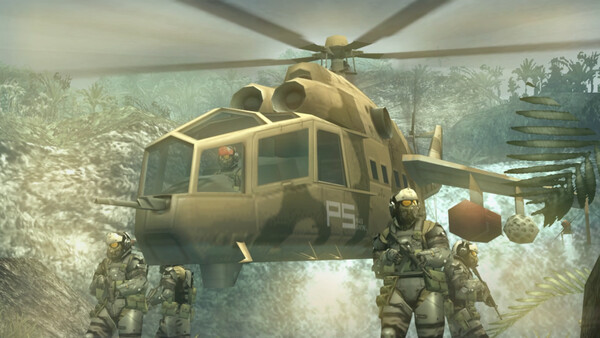
The Beauty and the Beast Unit functions as the primary boss ensemble of MGS4, consisting of four war-traumatized women encased in powerful mechanized suits. Laughing Octopus uses camouflage and tentacle-like appendages to ambush Snake in close quarters during Act 2. Raging Raven takes to the skies with wing-mounted weaponry in a vertically oriented battle across a tower in Act 3. Crying Wolf commands a rail gun on a snowy battlefield in Act 4, creating a tense sniper-style encounter. Screaming Mantis uses psychokinetic puppetry to control enemy soldiers and even dolls of past series bosses in Act 5. Each battle has two phases: a mechanized combat phase followed by a Beauty phase where the women emerge from their suits, and players can choose lethal or non-lethal approaches in each stage to unlock different rewards.
Big Mama, the codename for EVA from Metal Gear Solid 3, resurfaces as the leader of a European resistance cell and the biological mother of Solid and Liquid Snake. Naomi Hunter, once an ally in the original Metal Gear Solid, occupies a morally ambiguous role throughout MGS4 — she is instrumental in developing both the suppressive nanomachines and the tools to counteract the Patriots' system, serving dual allegiances until her tragic final act. Big Boss himself makes a pivotal appearance in the game's epilogue, providing the definitive resolution to the series' overarching themes of loyalty, legacy, and the cycle of conflict between soldiers and the systems that control them.
Metal Gear Solid: Peace Walker — Big Boss and the Militaires Sans Frontières
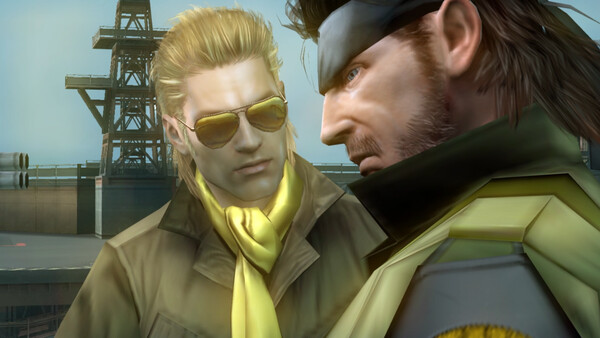
Set in 1974, Peace Walker follows Big Boss — still operating under the codename Snake — as he builds the Militaires Sans Frontières (MSF, or Soldiers Without Borders), a private military organization based on an offshore platform in the Caribbean. Players directly shape MSF through the Mother Base management system, recruiting defeated enemy soldiers via the Fulton Recovery System and assigning them to Combat, R&D, Mess Hall, Medical, and Intel divisions. Big Boss's journey in Peace Walker is central to understanding his transformation from the disillusioned hero of Snake Eater into the controversial figure who would eventually be branded as a villain, as the game explores his philosophical divergence from The Boss's final will.
Kazuhira Miller (Kaz) serves as Big Boss's second-in-command and the co-founder of MSF. A half-Japanese, half-American businessman with military aspirations, Miller handles the operational and logistical side of Mother Base and provides extensive codec support during missions. His pragmatic and sometimes ruthless approach to growing MSF contrasts with Snake's more soldier-centric worldview, and their partnership forms the narrative backbone of the game. In gameplay, Miller's briefings guide players through both story missions and the optional side operations, and his management insights directly affect Mother Base development efficiency.
Metal Gear Solid: Peace Walker — Supporting Cast and Antagonists
Dr. Strangelove, a brilliant AI researcher, is recruited to MSF after being encountered as part of the CIA's Peace Walker project. Obsessed with recreating the mind of The Boss through artificial intelligence, she designed the Mammal Pod — the AI core that drives the Peace Walker mech. Huey Emmerich, the father of Otacon and a mechanical engineering genius, designed the bipedal locomotion systems for Peace Walker and later assists MSF with Metal Gear ZEKE development. Both characters play dual roles as mission-relevant NPCs and as recruitable specialists whose expertise directly impacts the player's R&D capabilities at Mother Base.
Paz Ortega Andrade initially presents herself as a young Costa Rican peace activist seeking MSF's help, but her true identity as Cipher agent Pacifica Ocean is one of the game's most significant plot twists. She ultimately hijacks Metal Gear ZEKE for a climactic boss battle. Hot Coldman, the CIA Station Chief for Central America, serves as the primary human antagonist, orchestrating the Peace Walker project as a means to validate nuclear deterrence theory through an actual retaliatory launch. Ramón Gálvez Mena, a KGB operative posing as a university professor, manipulates MSF into confronting the CIA's operations in Costa Rica, while the Sandinista commander Amanda Valenciano Libre and her younger brother Chico become loyal allies who join Snake's growing army.
The AI weapons themselves — Pupa, Chrysalis, Cocoon, and Peace Walker — function as the game's major boss encounters, each requiring distinct tactical approaches. These unmanned mechs were designed as escalating testbeds for The Boss's AI, and their battles demand cooperative strategies, making them ideal for Peace Walker's multiplayer-focused CO-OPS missions. The final confrontation with Peace Walker itself is among the most thematically resonant boss encounters in the series, as the AI channeling The Boss's will ultimately chooses self-destruction rather than trigger a nuclear exchange.
Metal Gear: Ghost Babel — Characters in a Non-Canon Classic
Ghost Babel, originally released for the Game Boy Color and receiving its first-ever re-release in this collection, presents an alternate-continuity adventure starring Solid Snake. Set seven years after the Outer Heaven uprising, Snake is pulled out of retirement by Colonel Roy Campbell to infiltrate the fortress of Galuade in Central Africa, where a rogue special forces unit has seized a new Metal Gear prototype. Despite being non-canon, the game features writing that faithfully captures the series' tone of military thriller intrigue, codec-driven character development, and themes of nuclear deterrence.
Snake's primary support team includes Chris Jenner, a mission analyst and his main codec contact who provides tactical guidance throughout the operation, and Weasel (Jimmy Harks), a DIA informant embedded within Galuade who feeds Snake intelligence while maintaining his own hidden agenda. The antagonist force is Black Chamber, an elite unit of renegade operatives, each of whom serves as a distinct boss encounter. Its members include the flame-wielding Pyro Bison, the blade-armed Slasher Hawk, the puppet-master Marionette Owl, and the explosives expert Black Arts Viper — each demanding unique strategies to defeat in Ghost Babel's top-down stealth-action gameplay.
Black Chamber's leader, Black Arts Viper, holds a personal connection to Snake's past and serves as the narrative's emotional anchor among the antagonists. The character of Augustine Eguabon, the general who commands Galuade, adds a layer of postcolonial political commentary rare for the series' handheld entries. Ghost Babel's cast may be smaller in scope compared to its console counterparts, but the sharp writing and memorable codec conversations — including the famously meta-fictional optional calls — ensure that each character leaves a lasting impression on players experiencing this hidden gem for the first time through the Master Collection.